Alabba: A Handwritten Font That Feels Fresh and Intentional
I opened a blank brand board last week for a small skincare line that a friend was launching. The brief was simple: natural ingredients, modern feminine energy, nothing too polished or corporate. I pulled up a few script fonts I had used before, but none of them quite matched the brief. That is when I decided to test Alabba, a fresh handwritten font from Script Amp that I had bookmarked a few weeks earlier. Within minutes, it was clear this font had something different to offer.
First Impressions on the Brand Board
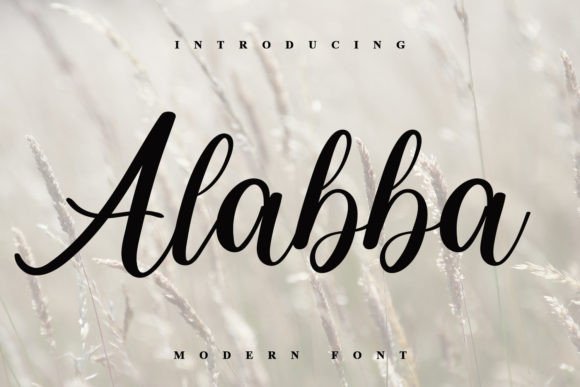
Alabba landed on the board as a logo draft for the brand name, and it immediately shifted the tone of the entire project. The font carries a natural, hand-drawn quality that feels personal without looking careless. Each letterform has a gentle rhythm, with slight unevenness that gives it an authentic handwritten character. This is not one of those overly polished scripts that loses all personality. Alabba retains the warmth of pen on paper, which is exactly what the skincare brand needed.
I tested it at a few different sizes on the board. At large display sizes, the strokes read clearly and the ligatures between letters create a smooth flow. The lowercase letters are well proportioned, and the uppercase set adds a nice contrast when used at the start of a word. The overall mood is soft, approachable, and slightly whimsical, but still grounded enough to feel professional. For a handwritten font, Alabba strikes a good balance between charm and readability.
Where Alabba Shines in Real Design Work
After the brand board, I took Alabba into a few more applications to see how it held up across different formats. Here is where it performed best in my testing.
Logo Design and Brand Identity
Alabba works beautifully as a primary logo font for businesses that want a handmade, artisanal feel. I tried it on a logo concept for a small bakery, a floral studio, and a handmade soap seller, and in each case the font brought a sense of personal care to the mark. The ligatures and alternates helped avoid awkward letter combinations, which can be a common problem with script fonts. If you are designing a brand identity that relies on a handwritten logotype, Alabba is a strong candidate to test early in the process.
Packaging Design and Product Labels
This is where Alabba really started to impress me. I placed the font on a mockup for a small product label, and it sat naturally alongside a simple botanical illustration. The handwritten quality made the packaging feel less industrial and more like something you might find at a local artisan market. For product categories like skincare, candles, gourmet food, or gift items, Alabba adds a layer of warmth that a standard serif or sans serif would not achieve. It works well on both short product names and ingredient highlights.
Social Media Graphics and Web Headers
I tested Alabba on an Instagram post mockup and a homepage hero section. On social media, the font stood out in short quote cards and promotional banners. It kept its character even when scaled down for mobile feeds. On the web header test, I paired it with a clean sans serif for the navigation and body text, and Alabba drew the eye naturally as the headline. It is well suited for hero titles, taglines, and accent phrases where you want a personal, handcrafted touch.
Business Cards, Invitations, and Printed Stationery
Printed samples showed that Alabba retains its detail well at typical card and invitation sizes. I ran a quick test on a business card mockup and a wedding invitation layout, and the font looked crisp on both. The handwritten style fits perfectly for wedding suites, save-the-dates, and thank-you cards. Small business owners who want their stationery to feel approachable will find a lot to like here. For flyers and posters, Alabba works best as a headline or decorative accent rather than for large blocks of copy.
Testing the Limits: Where Alabba Steps Back
No font is a universal solution, and Alabba has its limitations. It is primarily a display font, not a body text typeface. When I tried setting it at very small sizes for long paragraphs, the readability dropped significantly. The handwritten strokes that look charming at large sizes become harder to parse in dense blocks of text. For any project that requires extended reading, such as a brochure body, website article, or product description, you will want to pair Alabba with a legible serif or sans serif instead.
I also tested it in a more formal corporate context, and it was not the right fit. A law firm, financial service, or tech startup would likely find Alabba too casual for their brand voice. The font carries a handmade, gentle personality that works best in creative, lifestyle, and artisanal spaces. If your project leans toward serious, corporate, or minimalist corporate branding, you may want to look at a cleaner script or a neutral sans serif.
Pairing Alabba with Other Typefaces
During the skincare brand project, I paired Alabba with a simple serif for body copy and secondary headings. The contrast between the handwritten logo and the structured serif created a clear visual hierarchy. A lightweight sans serif also works well as a companion, especially on websites and digital layouts where clean readability is essential. If you want a more decorative pairing, a subtle modern script can complement Alabba without competing, but I would keep that combination limited to accent uses.
For most branding projects, I recommend using Alabba as the hero font in a two- or three-font system. Let it carry the personality in the logo, headlines, and key accent text, and let a neutral partner handle the supporting roles. This keeps the design balanced and prevents the handwritten style from overwhelming the layout.
A Few Practical Notes Before You Download
Before using Alabba in client work or commercial products, take a moment to review the included font files and licensing terms. The font comes with standard file formats that work across design software, but it is always a good idea to confirm whether your intended use, such as branding, packaging, merchandise, or web embedding, is covered under the license. If you are selling templates or print-on-demand products, check the commercial license details carefully to avoid issues later.
I also recommend testing Alabba with a few sample words from your actual project before committing to it. Try it on a logo draft, a product mockup, and a social media graphic. See how it reads at different sizes and on different backgrounds. The font includes alternates and ligatures that can help customize the look, so explore those options early to get the best result. A little testing upfront will save you time and ensure the font fits the brand voice naturally.
Alabba is not a font that tries to do everything. It knows its strengths and stays in its lane. For designers working on boutique branding, wedding stationery, product packaging, or any project that benefits from a warm handwritten touch, this font from Script Amp deserves a spot in your active type library. It is one of those fonts that feels fresh right out of the box and only gets better as you find the right project for it.